Ford Transit Ambulance Interior: Layout, Equipment and Specifications
navidMay 3, 2026
Ford Transit Ambulance Interior By Infinity Chassis Engineering Team – ISO 9001:2015 & EN1789 Certified
Introduction
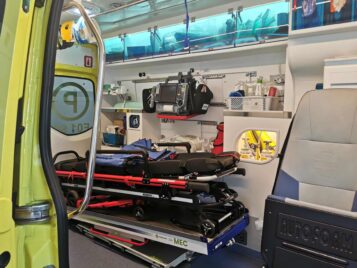
The interior of a Ford Transit ambulance is where life-saving care actually happens. While exterior design matters, it is the patient compartment layout that determines how efficiently medical staff can work during transport.
In this guide, we explore the interior design, equipment placement, and technical specifications of Ford Transit ambulances manufactured by Infinity Chassis Units.
Ford Transit Ambulance Interior Dimensions
Measurement
Value
Interior Length (patient area)
3,100 – 4,400 mm (varies by wheelbase)
Interior Width
1,780 mm (70 inches)
Interior Height (high roof)
1,900 mm (75 inches)
Interior Height (super high roof)
2,100 mm (82 inches)
Usable Floor Area
5.5 – 7.8 m²
Why size matters: The high roof allows medical staff to stand upright while attending to patients – essential for ALS and ICU procedures.
Interior Layout Options
Type 2 (Van Conversion) Layout
The Type 2 layout keeps the original van structure with modifications:
Feature
Configuration
Stretcher Position
Longitudinal (parallel to vehicle)
Attendant Seats
1-2 foldable seats along the side
Storage
Overhead cabinets and under-seat compartments
Action Area
Limited to one side of stretcher
Type 3 (Modular Box) Layout
The Type 3 layout offers more flexibility:
Feature
Configuration
Stretcher Position
Longitudinal or transverse
Attendant Seats
2-3 seats (forward or rear-facing)
Storage
Full-height cabinets, overhead lockers
Action Area
Both sides of stretcher possible
Key Interior Features
1. Flooring
Feature
Specification
Material
Marine grade plywood covered with vinyl
Properties
Non-slip, antibacterial, easy to clean
Thickness
12-18 mm
Seams
Heat-welded, waterproof
2. Cabinetry
Feature
Specification
Material
Fiberglass or PVC fiberglass
Surfaces
Smooth, easy-clean, antibacterial
Doors
Hinged or sliding with secure latches
Drawers
Full-extension, heavy-duty slides
3. Seating
Seat Type
Location
Features
Attendant Seat
Side of stretcher
Foldable, under-seat storage, 3-point belt
Doctor Seat
Optional, front-facing
Swivel base, adjustable height
Rear Jump Seat
Optional, rear area
Foldable, 2-person
4. Lighting
Light Type
Purpose
Specification
Ceiling LED
General illumination
Dimmable, 12V
Spot LED
Procedure lighting
Focused beam, adjustable
Loading Light
Rear door area
Flood light for night operations
Stimulus lights
Emergency warning
Synchronized with siren
Medical Equipment Placement
Standard BLS Equipment Placement
Equipment
Location
Notes
Primary stretcher
Center, longitudinal
Floor-mounted locking system
Oxygen cylinders
Rear or side cabinet
2 x 10L with restraints
Suction unit
Wall-mounted or portable
Near stretcher head
First aid kit
Easy-access cabinet
Near side door
Monitoring equipment
Shelf above action area
Pulse oximeter, BP cuff
IV hooks
Ceiling-mounted
2-4 hooks
ALS / ICU Equipment Placement
Equipment
Location
Notes
Defibrillator/monitor
Wall-mounted bracket
At stretcher head position
Transport ventilator
Secured shelf
With battery backup
Infusion pumps
Pole or shelf mounted
2-4 channels
Medication box
Lockable cabinet
Temperature-controlled
Waste disposal
Under-counter
Sharps container, biohazard
EtCO2 monitor
Near ventilator
Integrated with monitoring
Electrical System Interior
Component
Specification
12V outlets
Minimum 2 (patient area)
220V outlets
Minimum 2 (with inverters)
USB ports
Optional, for staff devices
Control panel
Digital touchscreen or analog
Battery status
Visual display
Shore power
External hookup with automatic transfer
Climate Control Interior
Feature
Specification
Patient compartment AC
Roof-mounted or split system
Heating
Diesel-fired heater or engine heat
Ventilation
Roof fan, positive pressure option
Temperature range
16-25°C (maintainable)
Air changes
Minimum 6 per hour
Interior Materials Comparison
Material
BLS Standard
ALS Premium
Flooring
Marine plywood + vinyl
Same + additional sound insulation
Cabinetry
PVC fiberglass
Fiberglass with soft-close
Countertops
Laminated
Anti-bacterial solid surface
Wall panels
Vinyl-coated
Antibacterial composite
Seat upholstery
Standard vinyl
Medical-grade, easy-clean
Ford Transit Ambulance Interior by Medical Level
BLS (Basic Life Support) Interior
Feature
Configuration
Stretcher
Manual hydraulic, 1 unit
Oxygen
2 x 10L cylinders
Monitoring
Pulse oximeter, BP cuff
Suction
Portable unit
Storage
Basic cabinets
Lighting
Ceiling LED, loading light
Seating
1 attendant seat
ILS (Intermediate Life Support) Interior
Feature
Configuration
Stretcher
Manual or electric
Oxygen
2 x 10L or 2 x 15L
Monitoring
AED, portable monitor
Suction
Fixed + portable
Storage
Enhanced cabinetry
Lighting
Ceiling + spot LED
Seating
2 attendant seats
ALS (Advanced Life Support) Interior
Feature
Configuration
Stretcher
Electric, with loading system
Oxygen
2 x 15L or central system
Monitoring
Full defibrillator/monitor (12-lead)
Ventilation
Transport ventilator
Infusion
2-4 infusion pumps
Suction
Fixed high-capacity
Storage
Full modular cabinetry
Lighting
Ceiling + spot + dimmable
Seating
2-3 attendant seats
Space Optimization Features
Feature
Benefit
Foldable seats
Create working space when not in use
Overhead cabinets
Maximize floor space
Under-seat storage
Use otherwise wasted space
IV hooks on ceiling track
Adjustable positioning
Wall-mounted equipment
Keep floor clear
Modular cabinetry
Reconfigure as needs change
Common Questions About Ford Transit Ambulance Interior
Q: How many people can work inside a Ford Transit ambulance? A: In Type 2, 1-2 medical staff. In Type 3, 2-3 medical staff can work simultaneously around the stretcher.
Q: Can a paramedic stand upright in a Ford Transit ambulance? A: Yes. The high roof provides 1,900 mm (75 inches) of standing height. The super high roof provides 2,100 mm (82 inches).
Q: How are stretchers secured? A: Floor-mounted locking systems with automatic engagement. Tested to withstand 10G deceleration.
Q: Is the interior easy to clean after infectious patient transport? A: Yes. All surfaces are antibacterial, non-porous, and seamless. The flooring has heat-welded seams.
Q: Can the interior layout be customized? A: Yes. Infinity Chassis Units designs each interior according to client protocols and equipment brands.
Customization Options from Infinity Chassis Units
Area
Options
Stretcher position
Longitudinal or transverse
Action area side
Left, right, or both
Cabinetry material
PVC fiberglass or premium fiberglass
Seat configuration
1, 2, or 3 attendant seats
Oxygen system
2, 3, or 4 cylinders
Inverter size
2,000W – 5,000W
Lighting
Standard or premium LED
Flooring
Standard marine vinyl or premium antibacterial
Why Choose Infinity Chassis Units for Ford Transit Ambulance Interiors?